Stories by the CODI Southern office
Translate by Pawinnut Chaiyasuan
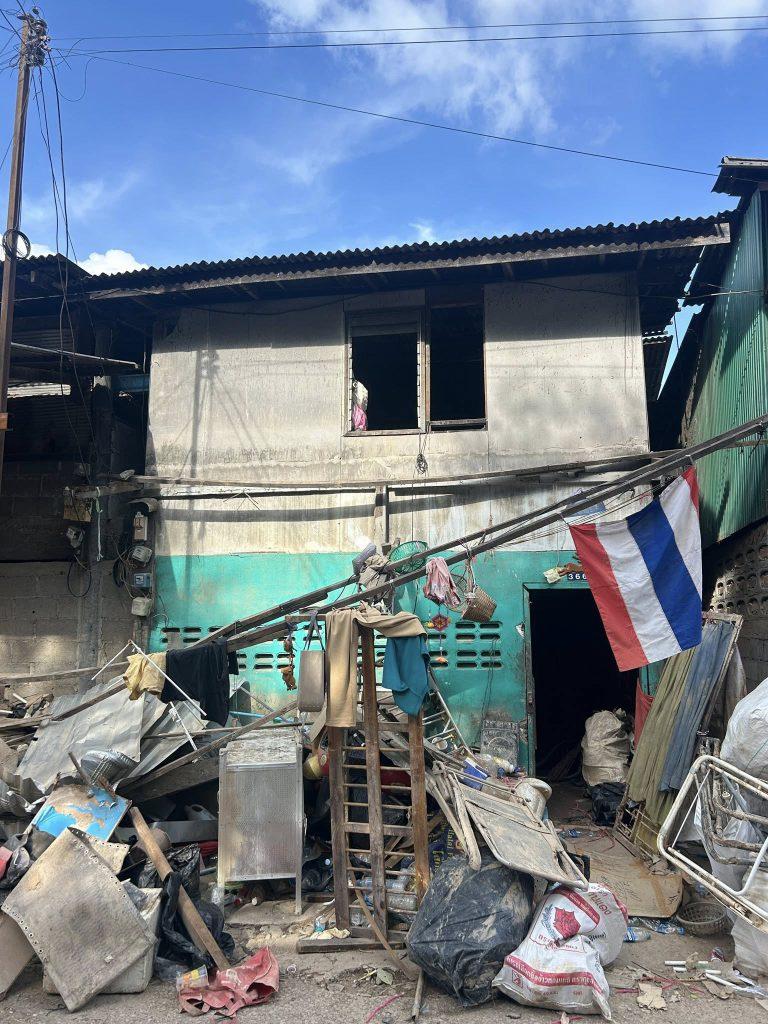
Flooding in Southern Thailand continues to heavily impact local communities, including prolonged waterlogging, contaminated floodwater, and increasing health risks. This situation makes urgent, well-coordinated assistance important. In response, the Community Organizations Development Institute (Public Organization) CODI, and Community Networks have taken a primary coordinating role, connecting community networks nationwide to ensure timely and systematic assistance and to empower collective community networks action in alleviating flood impacts in the South.
Coordinated Logistics: From Collection to Distribution
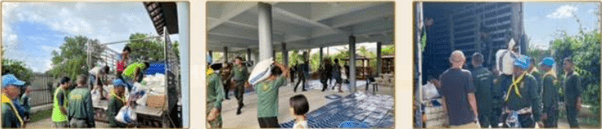
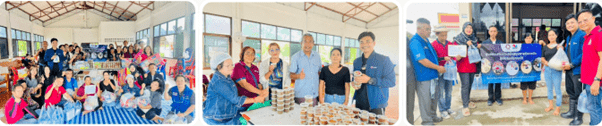
Community networks in the Northeast (Isan) gathered essential items which were more than 14 tons of relief supplies to Southern Thailand by two 6-wheel trucks. Then, CODI Southern Regional Office staff and local community networks supported the operational process of receiving supplies, sorting by category, assembling relief packs, and distributing them to flood-affected communities and households as rapidly as possible.

Community-Led Support on the Ground
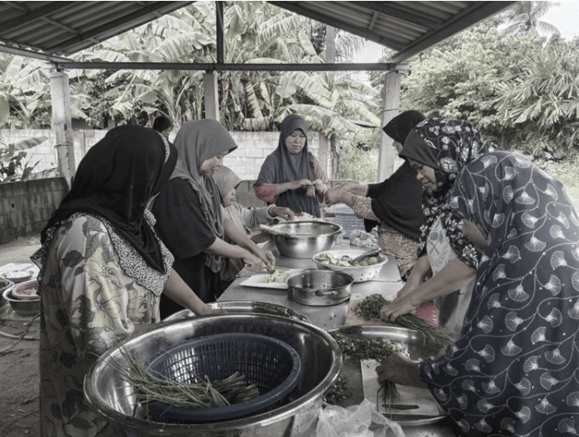
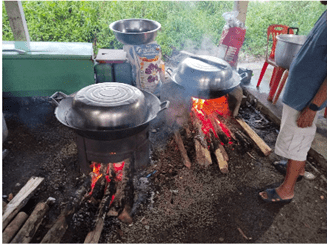
Beyond goods distribution, community networks have expanded community management and relief efforts to include direct community care. Community networks in Pak Phanang launched the “Curry Team: Community Kitchen” initiative to support families facing contaminated floodwater and prolonged hardship in 17 sub-districts across three districts in Nakhon Si Thammarat Province (Pak Phanang, Cha-uat, and Chian Yai). Meals and survival items from different areas such as Pak Phanang and Thung Song were prepared and delivered continuously through community-based teams. Moreover, in Hat Yai District, Songkhla Province, local community kitchens prepared and delivered 1,500 meal sets of rice with shrimp paste curry to affected households in urban areas urgently. These actions highlight the critical role of grassroots action, both in meeting immediate needs during crisis and revitalization of traditional knowledge.
Structural Recovery for Indigenous Communities
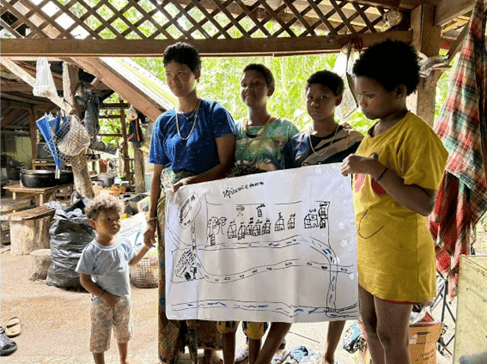
Recognizing that short-term aid is insufficient, CODI has initiated long-term recovery efforts for indigenous communities. Through the project “Disaster-Resilient Maniq Housing” in Pa Bon Sub-district, Phatthalung Province, CODI and partner agencies under the Ministry of Social Development and Human Security, and conservation authorities conducted field surveys, participatory design, and planning to develop Disaster-Resilient Mani Housing for the Maniq indigenous community affected by landslides and flooding. These homes are adapted to local geography and cultural lifestyle, aiming to restore stable housing and dignity for affected indigenous populations post-disaster. Inclusivity is equally prioritized. The process actively involves Maniq community members of all ages ensuring that reconstruction reflects real needs and respects cultural identity.
War Room: From Field Data to Decision Making for Flood Management
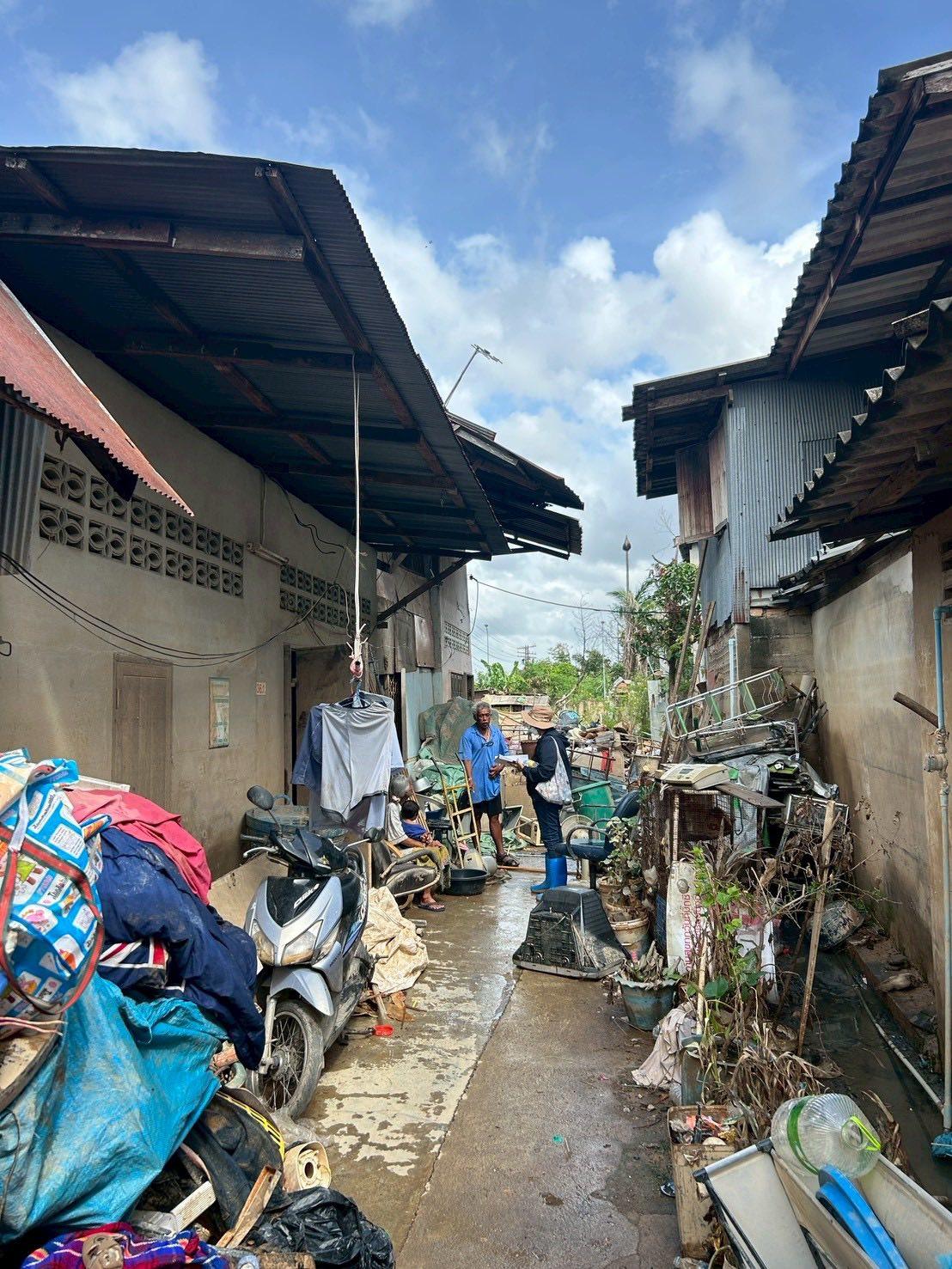
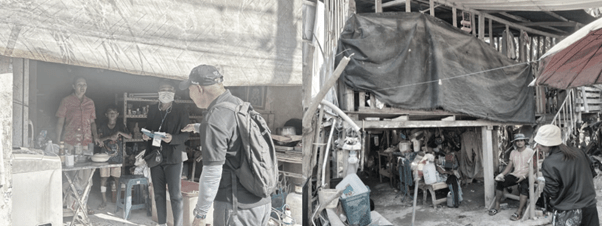
CODI has established “War Room” as an operational coordination center to collect field data, observe situations, assess urgent needs and prioritize resource distribution precisely. It brings together community-based actors, local leaders, community architects, builders, engineers and CODI staff to coordinate both immediate relief and long-term reconstruction. The team proceeded with fieldwork in U-Taphao Station Community and Ton Do Community, and aimed to collect data from more than 800 flood-affected households, representing approximately 2,720 people. In parallel, CODI has planned to repair 12 houses for elderly persons in collaboration with the Department of Older Persons. The data will be used to also develop project proposals and mobilize support under the Baan Mankong (Secure Housing) Program. Beyond connecting information from community leaders, field networks, and central teams to support coordinated decision-making, the War Room also brings emergency response and recovery work together in one place. It helps ensure that support moves forward from meeting urgent needs on the ground to rebuilding homes and restoring everyday life for affected communities.
A Community-Driven Model of Response
Field experience demonstrates a model of collaboration in action, from cross-regional networking to resource mobilization, systematic logistics management, and the use of community kitchens as a front line of care, to long-term recovery efforts for vulnerable groups and indigenous communities. The work carried out by Community Networks, CODI staff, and its partner is therefore not simply about delivering aid, but about building a community-led system of support that connects people, sustains solidarity, and stands firm while the crisis continues. It also affirms that “the water has not yet receded, but the heart of the community has never been flooded,” and that the power of collective action continues to stand alongside those affected.